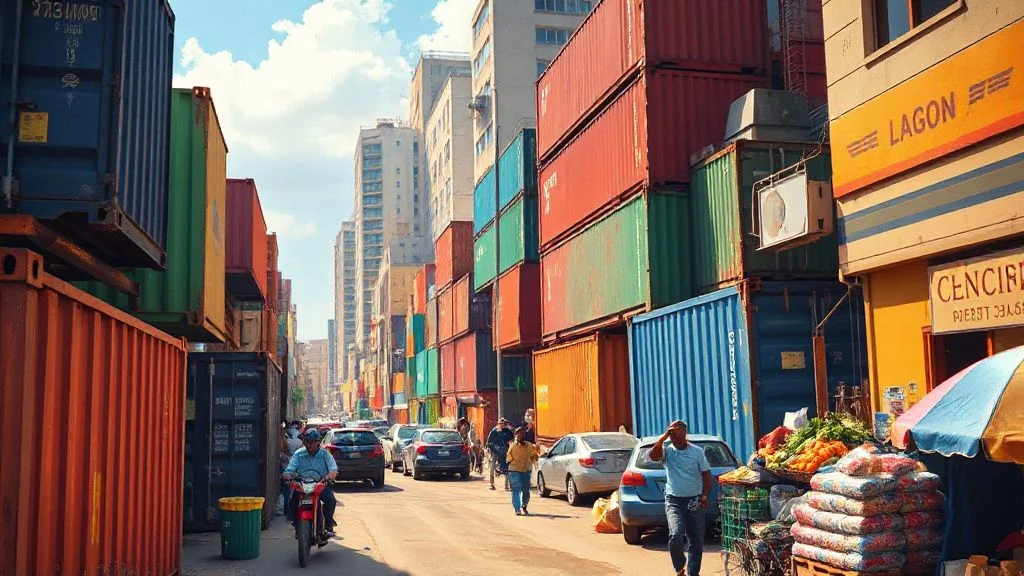
When relocating to Nigeria, particularly to bustling cities like Lagos, understanding your shipping options is essential. For many expatriates and returning Nigerians, the choice between Less than Container Load (LCL) and Full Container Load (FCL) shipping can significantly impact costs and logistics. This article will explore the nuances of each method, the associated costs, and where the break-even point lies for a typical household.
What can we help you with?
Three short questions, then just how to reach you. No account needed.
Understanding LCL and FCL Shipping
Full Container Load (FCL) involves booking an entire container, typically a 20ft or 40ft unit. This means you pay for the container as a whole, regardless of how much space your cargo occupies. A 20ft container can hold approximately 25 to 28 cubic meters (CBM) of goods. This method is often more cost-effective for larger shipments, as you avoid sharing the space with others and gain more control over your cargo.
Less than Container Load (LCL), on the other hand, is used when you do not have enough goods to fill an entire container. In this case, your cargo shares container space with other shipments, and you are charged based on the volume your cargo occupies. LCL is typically billed by the cubic meter, but the charges can add up quickly due to various fixed costs associated with consolidation and deconsolidation at both ends.
How Costs Are Determined
When considering LCL, you pay for the space your shipment occupies, assessed in cubic meters. However, the charges are based on the greater of either the actual weight of the cargo or its volumetric weight (calculated by dimensions). For instance, if you have a shipment that takes up 2 CBM but weighs only 100 kg, the volumetric weight may lead to higher charges if it exceeds the actual weight.
In contrast, with FCL, you pay a flat rate for the container, which can be advantageous when shipping larger volumes. For example, if you have 20 CBM of goods, booking an FCL could be more economical compared to LCL due to the fixed costs associated with the latter, which can disproportionately affect smaller shipments.
Calculating the Break-Even Point
The break-even point for deciding between LCL and FCL typically hovers around 15 CBM. Below this volume, LCL often remains the better option due to the shared costs reducing the per-cubic-meter expense. However, as your shipment nears or exceeds this threshold, FCL starts to become more appealing in terms of overall cost efficiency.
For example, let’s consider a household relocating to Lagos with the following shipment details:
- Volume: 18 CBM
- Weight: 900 kg
In this scenario, you would likely want to compare quotes for both LCL and FCL. With LCL, you would incur charges based on the cubic meters occupied, plus fixed costs such as terminal handling and documentation fees, which can inflate the total cost. For FCL, while the upfront cost appears higher, the price per cubic meter becomes more favorable once you are closer to filling the container. As you approach 20 CBM, it could mean substantial savings if you opt for FCL.
Analyzing Additional Costs
When evaluating LCL, it’s crucial to consider additional costs like:
- Origin consolidation fees
- Destination deconsolidation fees
- Terminal handling charges
- Documentation fees
These costs can quickly add up, making it essential to get an all-in quote for your specific volume rather than relying solely on the per-CBM rate. In many cases, the deconsolidation costs at the destination can be particularly high, especially in Lagos, where facilities may have limited capacity, leading to increased expenses.
Practical Considerations for Expatriates
For expatriates moving to Lagos, practical considerations extend beyond just the costs. The choice between LCL and FCL can also impact the timeline of your move. FCL shipments generally enjoy faster transit times since they do not require the consolidation and deconsolidation processes inherent to LCL shipments. If time is a crucial factor, especially for families with children starting school, FCL may offer a more timely solution.
Cultural nuances also play a role in logistics. For instance, power outages are common in Nigeria, which means that having a reliable generator or inverter is essential. If you are shipping appliances or electronic goods, consider their dimensions and weight carefully, as these factors will influence both shipping costs and the choice of shipping method.
Choosing the Right Neighborhood
Another factor that can influence logistics is the neighborhood you choose to live in. Lagos is a sprawling city with diverse areas, each offering distinct advantages. For example, Victoria Island is a popular choice for expatriates due to its proximity to business districts and amenities, but it can also be more expensive. On the other hand, areas like Lekki and Ikoyi are known for their family-friendly environments and expatriate communities, though they may have higher shipping and logistics costs due to limited access to transport and services.
What Expats Should Know
Here are some practical tips for expatriates considering LCL vs. FCL:
- Get multiple quotes for both LCL and FCL to compare total costs accurately.
- Consider the total volume and weight of your shipment, including any bulky or heavy items.
- Factor in potential delays and additional charges that may arise from LCL shipments, especially if you are shipping essential items.
- Research neighborhoods and their logistics capabilities to avoid complications upon arrival.
- Plan for potential electricity issues; shipping a generator may be a wise choice.
Conclusion
Choosing between LCL and FCL shipping to Lagos can significantly impact your relocation experience. Understanding the nuances of each option is essential for making an informed decision. While LCL might be suitable for smaller shipments, FCL typically becomes the more cost-effective solution as your volume approaches 15 CBM. By carefully evaluating costs, considering additional charges, and factoring in practical logistics, you can ensure a smoother transition to your new home in Nigeria.
Primary Sources
Last updated: October 2026