Yes — and in Lagos or Abuja an expatriate can run almost every daily errand in English. But the useful answer is more specific than that, because what you will actually meet is a range: formal English in offices and banks, Nigerian Pidgin in markets and with drivers, and a regional language in the places where neither is the first choice. This article sets out what the law says, what you will encounter where, and the handful of practical habits that make errands easier.
What can we help you with?
Three short questions, then just how to reach you. No account needed.
What the Constitution says
Section 55 of the Constitution of the Federal Republic of Nigeria provides that the business of the National Assembly shall be conducted in English, and in Hausa, Ibo and Yoruba when adequate arrangements have been made for that. Section 97 allows a House of Assembly of a state to conduct its business in English, and in one or more other languages spoken in that state, as the House may by resolution approve.
Whether that makes English "the official language" is a point on which commentators differ. A 2026 article in World Englishes notes that the Constitution never explicitly designates English as official, and that many read section 55 as recognising all four named languages. A Nigerian press explainer puts it the other way, describing English as Nigeria's only official language with Hausa, Yoruba and Igbo as constitutionally recognised national languages.
What is not in dispute is the practical consequence: English is the language of government, the courts, education and formal business across the federation. For an expatriate, that is what matters.
One honest caveat on figures. You will find percentages quoted for how many Nigerians speak English. No reliable census or survey figure for English proficiency in Nigeria could be verified for this article, so none is given here. Be sceptical of any guide that offers one.
Where English works, and where Pidgin works better
English, without qualification: banks, government offices, hospitals and clinics, schools, telecoms shops, airlines, formal retail, hotels, and any office setting. Written English is the default in all of these — forms, signage, contracts and receipts.
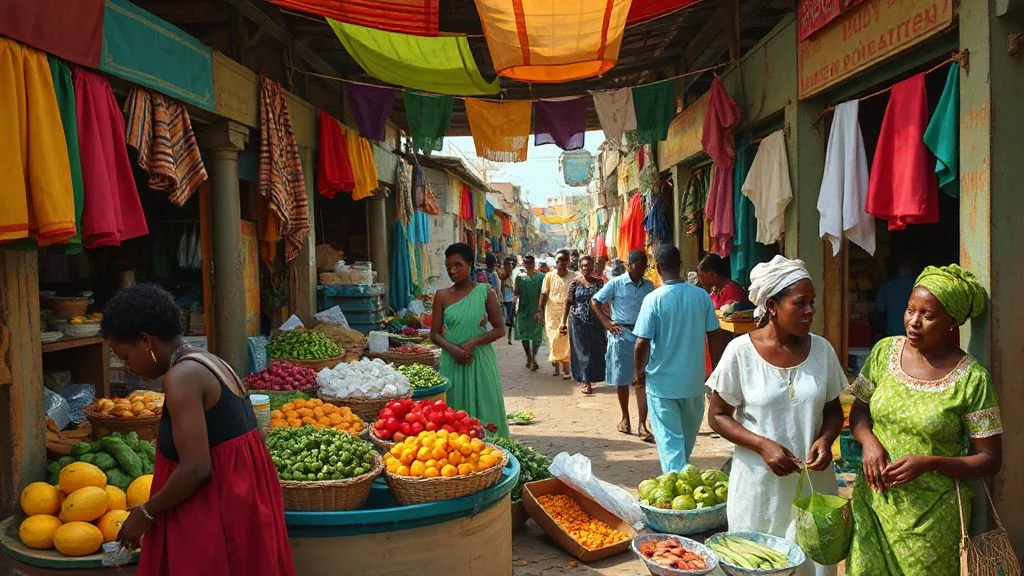
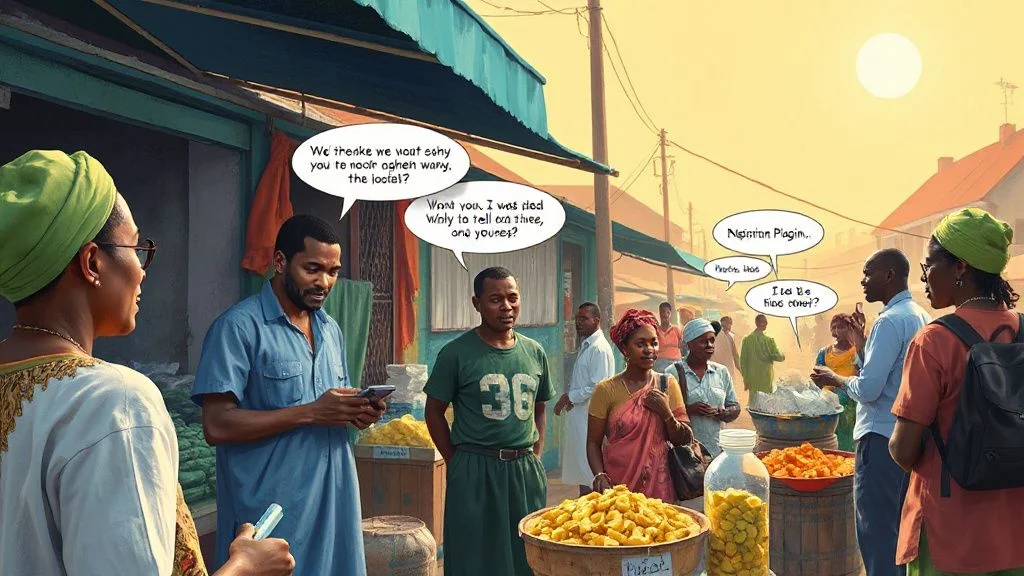
Nigerian Pidgin, in practice: markets, street vendors, drivers, artisans, security personnel and much informal commerce. Pidgin is an English-based language in its own right, widely spoken across the south and increasingly everywhere, and it is the register in which a great deal of everyday business actually happens.
You do not need to speak Pidgin, and nobody will expect you to. But recognising it is not "broken English" changes how you listen — and learning a handful of phrases is the single highest-return language investment an expatriate can make in Nigeria.
Regional languages: Yoruba in the south-west, including Lagos; Igbo in the south-east; Hausa in the north. In the north in particular, Hausa is the working language of daily life in a way that Yoruba and Igbo are not in Lagos, so an errand in a Kano market is a different experience from the same errand in Lagos.
Errand by errand
Banking. Entirely in English, and the formality is useful: you will be dealing with documents, a Bank Verification Number and a National Identification Number, and precision matters more than fluency.
Markets and shopping. Expect Pidgin. Prices in open markets are negotiated, and the negotiation is where a language gap costs money rather than comprehension. If you are new, going with a Nigerian colleague once is worth more than any phrasebook.
Transport. Drivers and informal transport operate in Pidgin and the local language. Ride-hailing apps remove most of the problem by fixing the destination and the price in writing.
Health care. Private clinics and hospitals work in English, including the paperwork.
Government offices. English, in both speech and forms. Immigration, the tax authority and the identity agency all operate in English.
Domestic help and artisans. Usually Pidgin. This is where misunderstandings about scope and price are most common, so write things down: a short written note of the task and the agreed amount prevents most disputes.
Four habits that help
- Slow down rather than simplify. Nigerian English is fluent and fast, and the accent, not the vocabulary, is usually what trips a newcomer. Asking someone to repeat something is normal and not taken badly.
- Confirm numbers in writing. Amounts, dates and addresses are where a misheard word costs money. Showing a number on a phone screen settles it instantly.
- Learn greetings in the local language. A greeting in Yoruba in Lagos or Hausa in Kano is a courtesy that changes the temperature of an interaction, and it takes an afternoon to learn.
- Expect formality in writing. Nigerian business English tends to be more formal than many expatriates are used to. Matching that register — proper salutations, full sentences — reads as respect.
What this means for settling in
Three practical conclusions. You will not need an interpreter for ordinary life in Lagos, Abuja or Port Harcourt. Your paperwork — permits, bank account, tenancy, school admission — will be in English throughout, so the administrative burden of moving to Nigeria is not a language burden. And the places where language genuinely affects outcomes are commercial rather than official: markets, artisans, drivers and domestic arrangements, where Pidgin is the working register and where writing down the number is the fix.
What expats should know
Four points. English is the language of government, courts, education and formal business, and section 55 of the Constitution requires the business of the National Assembly to be conducted in it. Nigerian Pidgin is a language in its own right and the real register of informal commerce — recognising it, and learning a little, pays off daily. Regional languages matter more in the north than in Lagos. And treat any quoted percentage of English speakers with suspicion: no reliable figure could be verified for this article.
Primary Sources
Last updated: November 2026