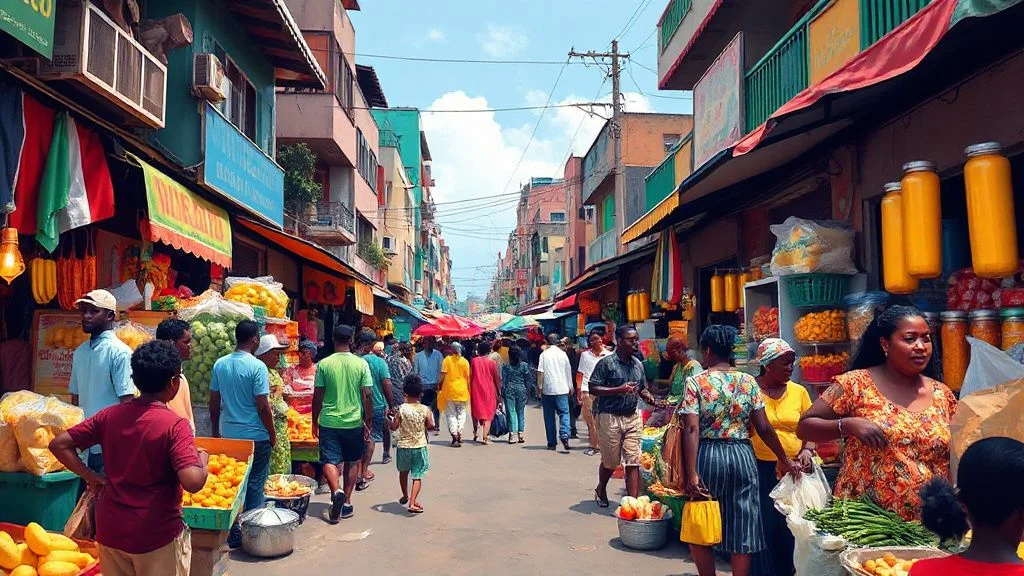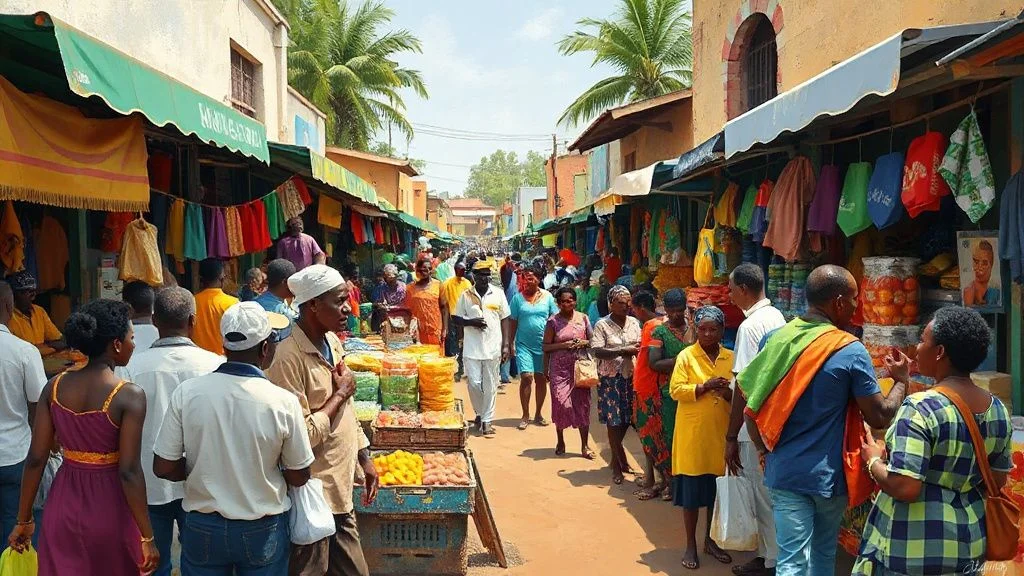
You can write a useful article about protecting your belongings in a crowded place without knowing a single crime statistic, and that is exactly what this is. The version of this page that was held tried to do it the other way around — with figures it did not have, places it should not have named and witnesses who did not exist — so it is worth being explicit about what changed.
What can we help you with?
Three short questions, then just how to reach you. No account needed.
What this article does not tell you
Three things are deliberately absent.
- No crime statistics. Not a rate, not a trend, not a share of visitors affected. We found no published Nigerian series for petty theft that we could date and attribute, so there is no number here. A made-up frequency would change how you behave on the basis of nothing.
- This page names no neighborhood as safe or unsafe, and names no market as a place where theft happens. The held version did both. Those are real districts and real traders, the claims had no source, and the harm of getting them wrong lands on people who live and work there.
- No anecdotes. The held version carried two first-person stories — a tourist distracted by a street performer, an expatriate who moved his wallet after a close call. Neither was a real account. Invented testimony is worse than a missing one, because it reads like evidence.
The security picture belongs to your own government
For whether and where you face elevated risk, there is one category of source worth using: the travel advice your own government publishes for Nigeria. It is written for your nationality, it carries a revision date, it is withdrawn and rewritten when the picture changes, and your insurer and employer will refer to it. A lifestyle page, including this one, cannot do any of that.
So: find your own ministry of foreign affairs or state department page for Nigeria, read it before you travel, and check it again before you move between regions. If your country publishes a registration scheme for nationals abroad, use it. We tried to read the United States advisory on 24 October 2026 and the server returned a 403, so we cannot quote it; that is a reason to go to it yourself, not a reason to substitute our impression for it.
One advisory, in its own words
To show what such a page actually gives you, here is the United Kingdom's advice for Nigeria, last updated 21 October 2026 and read on 24 October 2026. It states:
- Throughout Nigeria there are high levels of violent street crime including muggings and armed robbery
- Criminals have targeted visiting British nationals due to perceived wealth
- Take care if you're visiting crowded public places or attending events which attract large crowds
- Avoid carrying large amounts of cash and never wear valuable watches, jewellery or items of sentimental value
- Keep car windows up and doors locked, and make sure valuables are out of sight
Notice what that page does and does not do. It describes the kind of risk and gives conduct advice. It does not rank districts for you, and it does not tell you how likely anything is. If an advisory written by a government with consular staff on the ground declines to publish those two things, a guide has no business inventing them. And if you are not a British national, the above is an illustration of the form — your own government's version is the one that applies to you.
Precautions that need no statistics
These are choices about your own habits. None of them depends on knowing how common theft is, which is why they survive the removal of every number.
- Carry less. One card, the cash you expect to spend, and a phone. What is not on you cannot be taken from you, and the advisory quoted above makes the same point about cash and jewelry.
- Close the bag and put it in front of you. A zipped bag worn across the body and held in front is harder to open without you noticing than a shoulder bag or a backpack on your back.
- Separate your valuables. Phone and card in different pockets; a spare card and a photocopy of your passport left where you are staying. The point is that one loss is not every loss.
- Keep your hands and attention free in a dense crowd. A phone held up to navigate, and headphones, both cost you the thing that matters most, which is noticing what is happening around you.
- Decide where you are going before you set off, so you are not standing still reading a map with your belongings open.
Cash, cards and the walk away from a cash machine
Cash handling deserves its own paragraph because it concentrates risk in time and place: there is a moment when you are visibly holding money. The British advisory notes that Areas around banks and ATMs have seen a spike in criminal activity, which is the kind of statement a consular service can make and we cannot.
What you control: draw inside a bank or a staffed location rather than from a street machine where you can; put the money away before you step back onto the street rather than after; vary the time and place if you draw regularly; and keep your card's loss-reporting number somewhere other than your phone, so a stolen phone does not also cost you the means to block the card. Nigeria has usable card and transfer infrastructure, so carrying a week of cash is a choice, not a necessity.
Phones, bags and crowds
A phone is the most portable valuable most people carry and the one most often out of a pocket in public. Practical habits, again without any claim about frequency: use the phone with your back to a wall rather than in the flow of a crowd; set it to require a code or biometric immediately rather than after a delay; turn on your platform's find-and-wipe feature before you need it and know your own account password; and keep an offline note of your IMEI number, which your carrier and the police will ask for.
On crowded transport, keep the bag between your body and the direction people are pressing, and accept that in a packed vehicle you cannot watch a backpack behind you. If a stranger creates a commotion close to you, the useful instinct is to secure your own belongings first and move, rather than to engage with whatever is being presented. That is advice about your attention, not a claim about how anyone operates.
Who to call: the one thing we could not confirm
We are not printing an emergency number for Nigeria, and you should know why. A single national emergency number has been approved at policy level and the communications regulator has been given the rollout, but every statement we could find about whether it answers across the whole country came from news reporting and policy announcements rather than from the regulator's own published service page. The page we tried on the regulator's site returned a 404 on 24 October 2026.
A number you dial in an emergency is the last place to accept a figure from a press release. So get it from a source that will be accountable for it, before you need it: your embassy or high commission's consular page for Nigeria, your employer's security briefing, and your insurer's assistance line. Write all three down on paper and keep them with your passport copy, not only in the phone that might be the thing that is missing.
If something is taken, and what expats should know
In order: make yourself safe and leave the crowd before you check what is gone. Block cards and your phone line, and start the find-and-wipe. Report the theft to the police and ask for a written report, because almost every insurer and every replacement travel document requires one. Then tell your embassy or high commission if a passport or residence document was in the bag, and your employer if it held anything of theirs.
- No crime statistics appear on this page, because we found none we could date and attribute.
- This page names no neighborhood and no market. Any guide that does is telling you something it cannot know.
- Read your own government's travel advice for Nigeria, and note its revision date.
- Carry less, close the bag, keep your attention free. None of that needs a number.
- Get the emergency number from your embassy or employer, on paper, before you need it.
- Ask for a written police report if anything is taken.
The advisory quoted above is the United Kingdom's travel advice for Nigeria and its safety and security section, last updated 21 October 2026 and read on 24 October 2026.
AI-Generated Content: This article was created with AI assistance and may contain inaccuracies. Please verify important information with official sources.